Showing posts with label Saints. Show all posts

Sunday, November 1, 2026

ALL US SAINTS

This week the church celebrates the Solemnity of All Saints and the Commemoration of the Faithful Departed (All Souls' Day).

It's important, I think, to consider the two feasts at the same time, rather than as totally separate from each other. Christ revealed to us the truth that we are all one in him, all brothers and sisters, children of the same Father. St., Paul teaches us that we are as closely united as parts of a single body.

I like to think of a network. All human beings are in this network; some of us are alive, while most of us are deceased. But all of us together form the network of God's children, members of the dynamic loving family of the Holy Trinity. One word for this unity is "the Communion of Saints."

All of us are called to be saints -- let's not forget that. All Saints' Day gives us the opportunity to celebrate people who did a heroic job of being saints, people who can serve as models for us and who can intercede for us in the presence of God. But we saints on earth are striving to let the Holy Spirit fill us and transform us just as it did each of the canonized saints we venerate.

In professing the Creed each Sunday we say "I believe in the Communion of Saints" -- the "network" of which we are all members, living and deceased. The word "communion" naturally evokes the idea of "community." One of the lectionary readings for All Souls' Day is a well-known passage from Matthew containing these lines:


Then the king will say to those on his right, ‘Come, you who are blessed by my Father. Inherit the kingdom prepared for you from the foundation of the world. For I was hungry and you gave me food, I was thirsty and you gave me drink, a stranger and you welcomed me, naked and you clothed me, ill and you cared for me, in prison and you visited me.’ Then the righteous will answer him and say, ‘Lord, when did we see you hungry and feed you, or thirsty and give you drink? When did we see you a stranger and welcome you, or naked and clothe you? When did we see you ill or in prison, and visit you?’ And the king will say to them in reply, ‘Amen, I say to you, whatever you did for one of these least brothers of mine, you did for me.’ (Mt 25:34-40)


In this passage Jesus is telling us how we ought to treat our fellow community members. We can't
say, "Well, they're not from our country," or "They dislike us," or "Our economy might suffer if we help them."

Once again, saints, let us start by taking this passage personally, just as we did in last week's post, and ask ourselves what the Lord may be demanding of us as individual saints. If all of us were to respond to Jesus' challenge, the differences of opinion in our country would take on a whole different feeling. In speaking to or about others in the Communion of Saints we would naturally speak with respect, kindness, humility, generosity and, well, love.

Let's ask the saints who have gone before us to intercede for us with the Father that we may overcome together the problems that divide us in our part of the network.


Saturday, March 11, 2023

MY NEW FRIEND


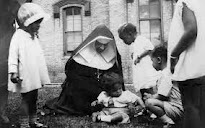
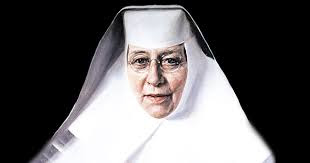
I recently finished reading a captivating biography entitled Saint Katharine, the life of Katharine Drexel, by Cordelia Frances Biddle. I knew very little about Katharine Drexel before I read this book and I am now an enthusiastic a devotee of hers.

Let me borrow a paragraph or two from the introduction:


 "Katharine Drexel underwent an extraordinary transformation, from a pleasure loving young lady of privilege during the ¨gilded age¨ to a woman passionately committed to aiding and uplifting the poorest of the poor. Born in 1858, she inherited a fortune when her father died in 1885. Throughout the nation, newspaper headlines trumpeted the sum: his estate was worth $15.5 million. It was unthinkable for a woman to possess such staggering wealth. While her two affluent sisters followed the conventional route of marriage and the charitable activities accepted within their sphere, Kate shocked her family and friends by choosing a path of self-sacrifice and service, first, taking religious vows in the Roman Catholic Church, and then forming her own teaching order. Her cousins, ensconced in their sumptuous residences, considered her choice dangerously radical.


Katharine combated racial prejudice and fought the Ku Klux Klan as she traveled through the country establishing schools for African and native Americans. She considered Xavier university in New Orleans a crowning achievement, but of equal importance was her tireless work on behalf of the Navajo and Pueblo nations….


At a time when journeys to the Dakotas, Wyoming, Arizona, and New Mexico were fraught with peril because of the government´s repressive policies, she overcame bigotry, distrust and threats of murder. She died in 1955, having devoted her considerable energies to uplifting America’s forgotten peoples.”


The first part of the book is filled with details of her early life as a young socialite, a member of one of the wealthiest families in Philadelphia. There were trips to Europe and travel to fancy resorts, and all of the intrigues of high society personalities.


The second part describes her founding of the Sisters of the Blessed Sacrament, and her many perilous trips to Indian reservations and poor Negro neighborhoods in the south, in spite of the threats and opposition that she encountered at every step until her death at the age of 97.


What most captivated me was the crucial and difficult period of what Biddle calls Katharine's "extraordinary transformation," the transition from a rich socialite to a very observant religious sister who practiced poverty that today would seem extreme. Just think about it: how do you change from that rich young socialite to that committed religious? The answer is one of the main points I got from the book, namely that she was able to hand things over to the Lord: from the craziness of leaving her former life to the craziness of founding schools on Indian reservations, or in locations where white neighbors despised what she was doing.


A second point that impressed me was Katharine's deep conviction that everything that she and her religious sisters were doing was God’s work and not hers. She was convinced that God was accomplishing his will through her faceless activity and relentless forging ahead in the face of every imaginable adversity.


This second point is an excellent one for me to reflect on during this year when our community is celebrating the 50th anniversary of our reopening Saint Benedict prep. (As an insider, I have always been convinced that whatever we may be accomplishing here is obviously not our own work but the Lord's.)


That first point, however, about leaving everything in God's hands, is something that I´m still working on, a grace that I hope the Lord will entrust to me someday. 


Meanwhile, I’ve begun praying to Saint Katharine to intercede for me on that one!


Saint Katharine, pray for us!


Saturday, November 12, 2022

Saint Martin's Fire


Yesterday, November 11, was the feast of Saint Martin of Tours. A classical biography of St. Martin, written by Septimius Severus, is available on line. Today, however, I'd like to share with you a little story about Martin excerpted from my book Pilgrim Road: A Benedictine Journey Through Lent.


Abbey of Ligugé

I’m speeding across the fertile farmland of France’s Poitou region on the train from Paris to Bordeaux. We’re about five minutes south of Poitiers when I look out the window to my left. The narrow, tree-lined canal that lies lazily alongside the tracks was built by the Romans when this was the province of Gallia. I look out the other side of the train just in time to glimpse a collection of stone buildings huddling around a church tower. This is the Benedictine Abbey of LigugĂ©, said to be the oldest monastery in the Western Christian world. Its story takes me on a trip back in time. . . .

About the year a.d. 361, a strange young man in his late twenties took up residence in the ruins of an ancient Gallo-Roman villa on the site of the present monastery. He was born in Pannonia (present-day Hungary) but was raised in Italy. At the age of fifteen, he had been forced by law to follow in the footsteps of his father, who was an officer in the Roman army. Three years later, he was baptized a Christian and soon became a disciple of Hilary, the saintly bishop of nearby Poitiers. Well-known for his holiness of life even before his baptism, over time the young man would become more and more famous for the countless miraculous cures he performed. As so often happens to holy men in the fourth century, he would eventually be drafted by the people to become bishop of their town.

Martin shares his cloak

As Bishop of Tours, he became an energetic foe of the pagan cults that still flourished in the Roman Empire at the time. His fame as a miracle worker spread across Gaul, and by the time of his death he was already being honored as “Saint Martin of Tours.” Many paintings and statues recall the famous story of his cutting his soldier’s cloak down the middle in order to give half of it to a beggar. The next night, the story goes, Jesus appeared to Martin clothed in the cloak he’d the saint had given to the poor man.


In the earliest biography of Saint Martin, Sulpicius Severus gives a long and impressive list of the monk-bishop’s wonderful deeds to prove that Martin was a perfect saint whom God protected from all harm. After the Life of St. Martin was published, however, Sulpicius felt he had to write a letter to a certain Eusebius to defend Martin from slander: there was a story going around alleging that the supposedly invulnerable Martin had once been burned in a fire. Here is the story that Sulpicius retells.


Martin is making the rounds of the parishes in his diocese and decides to sleep in a little room attached to the church he is visiting. He is uncomfortable with the luxury of the straw mattress that has been made up for him and so pushes the straw aside and sleeps on the wooden floor. During the night, a defective stove used for heating the room sets fire to the straw and Martin is awakened around midnight by a cloud of thick, choking smoke. He gropes his way quickly to the door and begins pulling frantically on the bolt to unlock it. The bolt won’t budge! Within a few moments, flames fill the room and engulf the bishop, singeing the hem of his robe. Weak with fear, he struggles again with the stubborn bolt. Still no luck! I’ll let Sulpicius finish the story in his own flowery style:


At length recovering his habitual conviction that safety lay not in flight but in the Lord, and seizing the shield of faith and prayer, committing himself entirely to the Lord, he lay down in the midst of the flames. Then indeed, the fire having been removed by divine intervention, he continued to pray amid a circle of flames that did him no harm.

By Martin’s own admission, he had taken longer than he should have to turn to the power of prayer. He’d been startled out of a sound sleep to find himself in terrible danger. The saint later spoke of this incident as a snare that the devil had laid for him, a snare that, for a moment, had worked.


Sulpicius is truly indignant when people imply that this scene shows some imperfection in Martin. “This event which is ascribed to the infirmity of Martin,” he argues, “is, in reality, full of dignity and glory, since indeed, being tried by a most dangerous calamity, he came forth a conqueror.”

The story certainly does end in dignity and glory, but maybe Christians would be better served by meditating on what the good bishop did for the first half-minute after he smelled smoke. I keep hoping to find a painting of this scene: Saint Martin, eyes wide with fright, desperately tugging with both hands at the rusty bolt as flames lick at his robe. That is a saint I could identify with.

I’ve experienced that minute of panic often enough, when I’ve forgotten that God is there with me. In the flames of difficult situations, when everything seems to be coming apart, I take too long to hand things over to the Lord. I, like Saint Martin, the great Bishop of Tours, have wasted time tugging at the rusty bolt and only later remembered to stop trying to control things and turn confidently to the power of prayer.


Maybe I could settle for a picture of the saint lying in prayer on the burning floor, untouched by the flames all around him. In any case, Martin of Tours is the one I pray to for the grace to keep my cool when I’m starting to panic. He knows what that feeling is like.


The blur of gray buildings is well behind us now, and the train continues rattling southwest toward the sea. No one else is looking out the window.


Saturday, October 30, 2021

ALL US SAINTS


+

THE PROBLEM WITH PERFECTION

Monday the church will celebrate the Solemnity of All Saints.
So I've been thinking about the terrible hoax that continues to be perpetrated on Christian believers by various writers over and over throughout the centuries. I'm referring to the idea that a "saint" is someone who is "perfect." Almost from the beginning certain biographers of saints felt compelled to show that their particular saint had no faults, no shortcomings and was free of all imperfections.

This post is mostly copied from one I wrote in 2014, but I'm using it as a starting point today because it bears repeating.

I'm sure that there must be folks around today who believe that the Church is watering down her definition of "saint" by canonizing people such as John XXIII and John Paul II whom we knew, and whose imperfections and weaknesses were well known. But in recent years our Pope has once again restated the ancient idea that every one of us is called to be holy (in Latin and the Romance languages the word for "holy" is the same word as "saint"). Pope Francis tells us, “saints are men and women who have joy in their hearts and spread it to others. Never hating, but always serving the other, is the greatest need.” He reminds us further, that “to be a saint is not a privilege of a few...All of us are called to walk in the way of sanctity.”

This "universal call to holiness" is not a call to be faultless, flawless and untainted by sin -- that is clearly not possible for anyone but God alone -- but it's there nevertheless. So we have to figure out how to be saints despite our imperfections.

TWELVE IMPERFECT PEOPLE

Did you ever look closely at the twelve people that Jesus chose as the ones who would spread his word to the world? The gospel passage for the feast of Simon and Jude listed them by name, and the roll call is pretty discouraging. Matthew was a tax-collector for the Romans, a trade despised by his fellow Jews. Simon the Zealot was a member of a group who hated the Romans and continually plotted their violent expulsion from Israel; I wonder what he and Matthew talked about over supper. Then there were James and John, nicknamed Boanerges or Sons of Thunder - (in other words, they were vociferous -- maybe even Loudmouths). There was Thomas who wouldn't take his brothers' word for anything but needed to see it wth his own eyes, and the blustery Peter who bragged that he would follow Jesus to death but then denied even knowing him. Judas Iscariot, whatever his motives, wound up handing Jesus over to the Sanhedrin.


STILL MORE IMPERFECT PEOPLE: YOU AND ME

We read a book in the refectory (we have table reading at supper) entitled "River of Fire: My Spiritual Journey," by Sister Helen Prejean. You may know her as the author of "Dead Man Walking," and as a champion of the movement to abolish the death penalty. "River of Fire" tells her story from childhood up to the time when she was introduced to a man awaiting execution. What happened after that is recounted in "Dead Man Walking." "River of Fire" is worth reading for a variety of reasons, especially for its honest look at what happened to religious life at the time of the upheavals of Vatican II. I'm mentioning it here because it's a good example of someone becoming "holy" simply by trying to follow God's lead, by allowing herself to be carried along on the "river" of God's plan. 

I pray that I can continue to be inspired by all the saints in my life, especially the hidden, secret, unsung saints who struggle faithfully every day to follow the Lord's lead, and to be carried through their life, according to God's will, on the river of fire. 

Saturday, February 8, 2020

SALT PLUS WHAT?

+
This Sunday's gospel reading is from the Sermon on the Mount, and begins, "You are the salt of the earth." Homilists like to concentrate on the central importance of salt in our lives, even today. And in Jesus' time it was even more essential, being used for preserving food in an age before refrigeration, was used for various medical purposes, and so forth. 

I found myself reflecting on this passage at my morning meditation, but I was concentrating on the next idea: If the salt loses is savor, with what can it be salted? It is of no use any more. Some commentators are bothered by the fact that salt, sodium chloride, can't really stop being salt. So they explain the image by saying that salt from the Dead Sea was extremely impure, and so over time the sodium would leach out and the salty flavor would be lost. 

Salt and sand
I want to suggest slightly different image. Pure salt can lose its flavor, not by becoming less than salt,
but rather by being adulterated with other substances. That's the way to make salt lose its saltiness: Just "cut" it with impurities. The more foreign matter you throw into the mixture, the less salty it becomes. 

Now, apply that to Jesus' image. We are each of us pure salt to start with; but then the influences of the wider culture (e.g. consumerism, hedonism and egoism) and the pressures of daily existence, can begin to adulterate the pure salt of who God made us. If we don't keep our guard up, these influences can make us less and less the people that God intends us to be -- our salt loses its savor.

Looking for some more insights into this passage, I went to the original Greek and found an interesting verb. It describes the salt as "losing its savor." That's a single word in Greek, a verb based on the root"mor-," meaning "foolish" (think "moron"). When a statement loses its meaning and stops making sense, that's moros. So, by extension, if salt loses its taste, that's moros too. 

St. Josephine Bakhita
The lesson is obvious: I cannot let impurities and foreign substances begin to adulterate the "salt" of my baptismal commitment. Laziness, selfishness, anger, dozens of little sins, can all adulterate the salt of who I am called to be. If I'm foolish (I won't use the biblical word "moron") I'll let this go on until my salt begins to lose its saltiness, and my baptismal identity is lost.


The saints are wonderful examples of keeping oneself free from the adulterations of the world that tend to make us less than we truly are. Today, Feb. 8, the Church commemorates an extraordinary saint, Josephine Bakhita. If you don't know the story of Josephine, you should read it. It can help each of us stay focussed on being the salt of the earth.


Saturday, November 2, 2019

YOU, ME, AND OTHER SAINTS

+
THE PROBLEM WITH PERFECTION

Yesterday the church celebrated the Solemnity of All Saints.
So I've been thinking about the terrible hoax that continues to be perpetrated on Christian believers by various writers over and over throughout the centuries. I'm referring to the idea that a "saint" is someone who is "perfect." Almost from the beginning certain biographers of saints felt compelled to show that their particular saint had no faults, no shortcomings and was free of all imperfections.

This post is mostly copied from one I wrote in 2014, but I'm using it as a starting point today because it bears repeating.

I'm sure that there must be folks around today who believe that the Church is watering down her definition of "saint" by canonizing people such as John XXIII and John Paul II whom we knew, and whose imperfections and weaknesses were well known. But in recent years our Pope has once again restated the ancient idea that every one of us is called to be holy (in Latin and the Romance languages the word for "holy" is the same word as "saint"). Pope Francis tells us, “saints are men and women who have joy in their hearts and spread it to others. Never hating, but always serving the other, is the greatest need.” He reminds us further, that “to be a saint is not a privilege of a few...All of us are called to walk in the way of sanctity.”

This "universal call to holiness" is not a call to be faultless, flawless and untainted by sin -- that is clearly not possible for anyone but God alone -- but it's there nevertheless. So we have to figure out how to be saints despite our imperfections.

TWELVE IMPERFECT PEOPLE

Did you ever look closely at the twelve people that Jesus chose as the ones who would spread his word to the world? The gospel passage for the feast of Simon and Jude listed them by name, and the roll call is pretty discouraging. Matthew was a tax-collector for the Romans, a trade despised by his fellow Jews. Simon the Zealot was a member of a group who hated the Romans and continually plotted their violent expulsion from Israel; I wonder what he and Matthew talked about over supper. Then there were James and John, nicknamed Boanerges or Sons of Thunder - (in other words, they were vociferous -- maybe even Loudmouths). There was Thomas who wouldn't take his brothers' word for anything but needed to see it wth his own eyes, and the blustery Peter who bragged that he would follow Jesus to death but then denied even knowing him. Judas Iscariot, whatever his motives, wound up handing Jesus over to the Sanhedrin.

STILL MORE IMPERFECT PEOPLE: US


We just finished a book in the refectory (we have table reading at supper) entitled "River of Fire: My Spiritual Journey," by Sister Helen Prejean. You may know her as the author of "Dead Man Walking," and as a champion of the movement to abolish the death penalty. "River of Fire" tells her story from childhood up to the time when she was introduced to a man awaiting execution. What happened after that is recounted in "Dead Man Walking." "River of Fire" is worth reading for a variety of reasons, especially for its honest look at what happened to religious life at the time of the upheavals of Vatican II. I'm mentioning it here because it's a good example of someone becoming "holy" simply by trying to follow God's lead, by allowing herself to be carried along on the "river" of God's plan. 

Our next table reading book is "A Saint of Our Own: How the Quest for a Holy Hero Helped Catholics Become American." From the Table of Contents, it seems that the book will be about people who have been officially canonized as saints. I'm looking forward to listening to it. 

I pray that I can continue to be inspired by all the saints in my life, especially the hidden, secret, unsung saints who struggle faithfully every day to follow the Lord's lead, and to be carried through their life, according to God's will, on the river of fire. 


Saturday, August 24, 2019

ANNOUNCING THE KINGDOM

+
Today, August 24, is the feast of the apostle Bartholomew. The refrain of the responsorial psalm at mass gave me a good meditation this morning:

"Your friends make known, O Lord, 
the glorious splendor of your kingdom." 


The psalm was chosen, obviously, because Bartholomew (also called Nathaniel) and the other apostles were "friends" of the Lord who "made known the glorious splendors of His kingdom." But then, naturally, I asked myself where I fit in. 


I'd like to think that I'm one of God's "friends;" but if so, how do I make known to people "the glorious splendors of God's kingdom?" I have plenty of opportunities, of course. The most obvious example is that, as a priest I have the privilege of announcing the kingdom at mass when I read the gospel and preach about it. Then, as a teacher, especially when I'm teaching the New Testament, I have another obvious opportunity to "make known the glorious splendors of His kingdom," as I study the Gospels with my students.

But I have far more numerous opportunities than these to proclaim the kingdom: The sort of opportunities that everyday life gives you and me all the time whenever we're interacting with a brother or sister. Examples of such opportunities are endless:

When I take the trouble to visit or simply phone a shut-in or someone who's in the hospital, I'm revealing to them something about the kingdom of God's boundless love for everyone, especially the poor, the sick, and the suffering.

When I'm patient with someone who rubs me the wrong way, I'm revealing to that person something about the Lord's kingdom of unconditional love and forgive
ness.

When I encourage a student or a brother monk who is feeling sad or angry, I making known to them the glorious splendor of the kingdom that welcomes those who are suffering in mind or body.


When I treat a street person with respect and dignity, I'm giving him or her a glimpse of the splendor of God's kingdom that welcomes the marginalized, the outsider who has been forgotten and left behind by society.

So, it seems that there's always plenty of work at hand for each of us friends of the Lord to make known the glorious splendor of God's kingdom.

So, on this feast of the apostle Bartholomew, let's get to work announcing the glorious splendor of God's kingdom!


Saturday, August 17, 2019

THE CLOUD OF WITNESSES

+


Today in the monastery we're celebrating the solemnity of the anniversary of the consecration of our abbey church, St. Mary of the Immaculate Conception, by Bishop James Roosevelt Bayley in 1890. (The church had already been dedicated in 1857, but couldn't be consecrated until it was completely paid for.)

By happy coincidence, the second reading at tomorrow's Sunday Mass begins with this familiar passage from the Letter to the Hebrews:


Since we are surrounded by so great a cloud of witnesses,
let us rid ourselves of every burden and sin that clings to us
and persevere in running the race that lies before us
while keeping our eyes fixed on Jesus (Heb. 12:1-2).

The preceding chapters in the letter had given a long, detailed list of the great figures of the Jewish Scriptures whose faith serves as an encouragement to all of us. This is the "cloud of witnesses" the writer is referring to. So as we were singing Lauds (Morning Prayer) this morning in church, looked around at the saints, the colorful "witnesses" in their stained glass windows. I noticed the German inscriptions in the windows, and started to think about the great cloud of witnesses who have worshipped in this building: The earliest monks from St. Vincent Archabbey in Pennsylvania, the German parishioners, the students of St. Benedict's Prep and St. Mary's Elementary School, as well as others who would come for Sunday Vespers, or employees of the nearby courthouse who attend mass here on Holy Days, and the members of the congregation that packs this church every Sunday to sing and shout God's praises at the 10:30 mass.

The communion of saints includes you and me 
Then, as the monks' chanting continued, I imagined the cloud extending to my own ancestors in the faith: grandparents, great-grandparents and so on, back through the ages, people whose faithfulness in handing on the gospel made it possible for my parents to hand on the faith to me.

The cloud then grew to include my two brothers and my sister Eleanor, who died at the age of two,  all of my aunts and uncles and cousins. Then I thought of the students I've taught who have gone on to glory, and the deceased parishioners who listened to my Sunday sermons.

I then realized why the sacred writer referred to a "cloud" of witnesses: because it's quite a varied and disorganized crowd. But today I feel their presence and their encouragement: All of these people of faith are my personal "great cloud of witnesses" who, having already arrived at the heavenly goal, are cheering me on right now, encouraging me to continue to grow in my faith, to fight the good fight and finish the race as they did.

I expect all of them to raise a loud cheer some day when I cross the finish line. Then I'll take my place in the grandstand and start cheering for the next people in the race.


Saturday, October 6, 2018

A CHALLENGING COLLAGE

+
The seventy disciples
During this past week a few images have been forming an interesting and challenging collage in my head. I'll put some of them together randomly in this post.

"CARRY NO MONEY BAG, NO EXTRA SHIRT"

Jesus sends his seventy(-two) disciples out to preach, heal, and cast out demons. But he tells them not to carry any supplies with them: The messengers of the Kingdom are to be totally dependent on God for everything. 


"LET ME FIRST GO AND BURY MY FATHER"

Then, as he begins his long journey to Jerusalem (Lk Chapters 9-18) various people come to him asking to follow him on the journey. One wants to go bury his father first, another wants to go say good-bye to his family, and so on. Jesus' reply is always the same urgent insistence on following immediately. One commentary says that these interactions "show the severity and unconditional nature of Christian discipleship."  I asked myself if my following of Jesus is unconditional. If I were to got to Jesus and offer my lukewarm, watered-down version of following, what would he reply?


I SAW SATAN FALL LIKE LIGHTNING

The disciples return from their first mission delighted. Listen to the beginning of today's gospel reading:  The seventy-two disciples returned rejoicing and said to Jesus,"Lord, even the demons are subject to us because of your name."Jesus said, "I have observed Satan fall like lightning from the sky. Behold, I have given you the power 'to tread upon serpents' and scorpions and upon the full force of the enemy and nothing will harm you. Nevertheless, do not rejoice because the spirits are subject to you, but rejoice because your names are written in heaven." (Lk 10:17 ff.) 
One commentator notes "The effect of the mission of the seventy-two is characterized by the Lucan Jesus as a symbolic fall of Satan. As the kingdom of God is gradually being established, evil in all its forms is being defeated; the dominion of Satan over humanity is at an end." I noticed the key words "gradually" and "is being defeated" (present progressive tense). The victory is already won, but not yet. We have been recruited by our baptism to fight for the establishing of the kingdom. But how committed am I to fighting the battle?


FRANCIS AND THERESE


This week we celebrated the feasts of two real warriors for the kingdom. On Monday we remembered that little twenty-four year-old cloistered nun who was a warrior from head to toe: St. Therese of Lisieux. Her name "the Little Flower" can be misleading. A look at her biography shows that Satan had his hands full with that determined woman.  Then on Thursday we celebrated St. Francis of Assisi, a warrior for the kingdom if ever there was one. Both he and Therese gave us living examples of  "the severity and unconditional nature of Christian discipleship." I had to remind myself that, rather than blushing for shame at their example, I should try to imitate them in becoming a relentless warrior for the kingdom. 

This collage is unsettling -- it makes me squirm. All this talk about the "severity and unconditional nature of the Christian discipleship," about being engaged in a relentless fight against the powers of evil, about being a fearless warrior like Therese or Francis.

Yet that's a major reason why we venerate the saints, isn't it? To ask their help in imitating their fierce determination to follow Christ at all costs. 


Saturday, November 1, 2014

SAINT STUFF

X
THE PROBLEM WITH PERFECTION

During this past week we celebrated the feast of the apostles Simon and Jude, and today (Saturday) I'm
writing this on the Solemnity of All Saints. So I've been thinking about the terrible hoax that continues to be perpetrated on Christian believers by various writers over and over throughout the centuries. I'm referring to the idea that a "saint" is someone who is "perfect." Almost from the beginning certain biographers of saints felt compelled to show that their particular saint had no faults, no shortcomings and was free of all imperfections.

I'm sure that there must be folks around today who believe that the Church is watering down her definition of "saint" by canonizing people such as John XXIII and John Paul II whom we knew, and whose imperfections and weaknesses were well known. But in recent years the Church has once again restated the ancient idea that every one of us is called to be holy (in Latin and the Romance languages the word for "holy" is the same word as "saint." This "universal call to holiness" is not a call to be faultless, flawless and untainted by sin -- that is clearly not possible for anyone but God alone -- but it's there nevertheless. So we have to figure out how to be saints despite our imperfections.

TWELVE IMPERFECT PEOPLE

Did you ever look closely at the twelve people that Jesus chose as the ones who would spread his word to the world? The gospel passage for the feast of Simon and Jude listed them by name, and the roll call is pretty discouraging. Matthew was a tax-collector for the Romans, a trade despised by his fellow Jews. Simon the Zealot was a member of a group who hated the Romans and continually plotted their violent expulsion from Israel; I wonder what he and Matthew talked about over supper. Then there were James and John, nicknamed Boanerges or Sons of Thunder - (in other words, they were vociferous -- maybe even Loudmouths). There was Thomas who wouldn't take his brothers' word for anything but needed to see it wth his own eyes, and the blustery Peter who bragged that he would follow Jesus to death but then denied even knowing him. Judas Iscariot, whatever his motives, wound up handing Jesus over to the Sanhedrin.

TWELVE MORE IMPERFECT PEOPLE

I thought of this yesterday during a community meeting with my brothers in the monastery -- one abbot and twelve monks, an interesting number. As I scanned the group, each of us with our strengths and weaknesses, our talents and our troubles, I thought of the motley group of Jesus' helpers, each one handpicked personally by Him yet full of faults and foibles. "Yeah," I figured, "I guess we're a match for them."

I pray that like the twelve apostles our closeness to Jesus will allow us very ordinary men to do whatever extraordinary things the Lord calls us to do. Meanwhile we just keep trying and striving. That's what saints do, they keep trying and striving and helping one another along the way.

Saturday, August 17, 2013

CLOUD OF WITNESSES


This week we had a big celebration in Newark Abbey as our novice, Brother Thomas Aquinas, professed his first vows as a Benedictine monk. 

As part of his retreat in preparation for taking vows, he and I reflected on a passage from Hebrews which, it turns out, is the second reading assigned for mass this Sunday, Aug. 18. The part we reflected on is this:


Therefore, since we are surrounded by so great a cloud of witnesses, let us also lay aside every weight and the sin that clings so closely, and let us run with perseverance the race that is set before us, looking to Jesus the pioneer and perfecter of our faith. (Heb.12:1-2a)


 (I reflect on this passage in a chapter in Downtown Monks entitled “Making Friends with the Saints.”) As Brother Thomas was professing his vows I was aware of all the “witnesses” crowding the church, not only the visible ones like his mother and brother and relatives and friends, not just his brother monks, or the students and faculty members of our school, but also the “cloud of witnesses” watching from heaven. The saints staring down from the stained glass windows (St. Benedict, John the Baptist, Saints Ann, Barbara, Agnes, Frances of Rome, and the rest) were just symbolic reminders of the fact that the sanctuary was indeed crowded with the presence of countless unseen witnesses, including deceased members of our monastic family.

It happened that the day after Br. Thomas’s profession was my birthday. And I became aware of the people who are encouraging me: Relatives, friends, colleagues and brother monks who are all running the race together with me right now. The realization began to dawn on me early in the week when I received a lovely encouraging email from a cousin in response to a blog post of mine. Then in the following couple of days came a bunch of birthday cards, emails, and phone calls from all sorts of people just wishing me a happy birthday. This was another glimpse of the “cloud of witnesses” both living and deceased who are rooting me on.

Each Sunday at mass during the Creed when we say we believe in “the communion of saints” we’re not talking about a lot of dead people: We’re talking about the Church. An ancient writer asked “What is the Church if not the assembly of all the saints?” The new Catholic Catechism says simply “The communion of saints is the Church.” (cf. #'s 946-948) But the Church includes you and me as well as those who have gone before us and who are now in glory.  As members of the communion of saints, you and I, just like the cloud of witnesses looking down from glory, encourage one another as we run the race.
 
I hope to be in the grandstand one day, but one of the important ways of getting there is to be a cheerleader for my brothers and sisters who are running alongside me right now. 

Please pray for Brother Thomas that he will be encouraged by the cloud of witnesses, and will prove to be a great cheerleader himself.