Showing posts with label Holy Week. Show all posts

Sunday, April 6, 2025

ABOUT TIME


Earlier this week, the gospel reading a mass told is that Jesus was preaching in
the temple, but the Pharisees and other enemies did not arrest him “because his hour had not yet come” (Jn 7:30).  


The Greek word that is translated “hour” is the noun kairos.


I’d like to reflect in this post on this very special word.


The Greeks had two words for “time.” The first is the kind of time you measure out in months, minutes and milliseconds. That is called chronos (which gives us such English words “chronological” and “chronometer”). This is time as something measurable, divisible into quantities. In the Parable of the Talents a master goes off on a journey and returns “after a long time (chronos) (Mt. 25:19).” Paul tells the elders of Miletus, “You know how I have lived among you the whole time (chronos) from the day I first came to the province of Asia. (Ac. 20:18)" We’re well acquainted with this sort of time; but in Greek there’s a second word for time, one which is central to understanding the Gospel message.


While chronos refers to time as measured off in minutes and hours, the second

word, kairos, means time as an event, an occasion or an opportunity. This is the time we refer to in expressions such as “We had a great time.” or “It’s high time we did something” or “It’s time to start.” Chronos answers the questions “What time is it?” and “How much time is left.” Kairos, on the other hand, is concerned with much deeper questions: “What’s the meaning of this moment?” “What is the significance of this event?”


Kairos has various meanings in the NT. It is often translated “season” – that is, a time that has a purpose, such as the season for harvest. The Septuagint translation of the famous passage in Ecclesiastes 3:1-8 begins "A time (kairos) to be born and a time  (kairos)  to die." Jesus walked up to a fig tree but found no fruit on it because “it was not the season  (kairos)  for figs. (Mk. 11:13)”


Kairos also has the sense of "a suitable time, an opportunity." The faithful servant in charge of the household will “distribute food to them at the due time (kairos)  (Mt. 24:45)” St. Paul encourages us, “Let us not grow tired of doing good, for in due time (kairos) we shall reap our harvest…. So then, while we have the opportunity (kairos) , let us do good to all… (Gal. 6:10)"


Sometimes kairos refers to the time ordained for the fulfilling of a prophecy, as when the angel Gabriel says to Zechariah, “But now you will be speechless and unable to talk until these things take place, because you did not believe my words which will be fulfilled in their proper time (their  kairos) . (Lk 1:20)” Jesus warns his hearers to be on watch for the final days, “Be watchful! Be alert! You do not know when the time  (kairos)  will come! (Mk. 13:33)”   


While we are learning how to measure time (chronos) more and more precisely, we seem to be losing our sense of kairos, of what time is for, of what our life ultimately means. For many people, time has lost its purpose. Boredom and depression haunt supposedly successful people who feel their lives are empty and meaningless, while depression and despair dog the poor and disadvantaged because they have no sense of a better future to give them hope. 


Lots of people try to fill the time as if it were an empty container by watching endless hours of mind-numbing television sitcoms, surfing the internet, or paging through meaningless magazines. Others even try to kill time as if it were a pesky weed or a threatening monster. Our world knows only chronos, how to measure it and use it, and cannot answer the kairos question, "What is this all ultimately about anyway?"   


Christians believe, though, that since the coming of Christ into time and space at
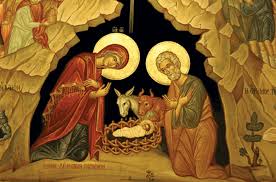
the Incarnation, there simply is no more chronos -- everything is kairos. When God came among us as a human, all of creation was given ultimate meaning, and all time became special and sacred. From that moment, every event of life is part of the unfolding story of God's love for the world. 


There is a catch, though: I still have to decide every day to live in kairos, to cooperate with God's saving plan for me. When I do this, the time I spend at the office or relaxing in front of the television or cooking supper, all of that is now sacred time, kairos. 


If, on the other hand, I insist on living in my own self-centered time, writing my own version of the story instead of God's, then I'm caught in the clutches of chronos and condemned to a life that has no real meaning. This refusal to live in God's kairos is what we call sin.


Kairos is a key to understanding Christian living. 


First, it teaches me to stay in the present moment, because this is the only time I can possibly meet God. I can't encounter the Divine in the past, because yesterday is gone, nor in the future, because tomorrow never gets here. Paul reminds the Corinthians, “Behold, now is the acceptable time (kairos), now is the day of salvation (2 Cor. 6:2).”


When I'm truly living in kairos, the joy of the kingdom will shine out in my way of speaking and acting. When my work, my play, and even my suffering are all sacred, then there will be no place in my life for work that is half-hearted or slovenly, for entertainment that is degrading to the human person, or for suffering that is separated from a sense of hope. Even the darkest and most painful hours of my life will be lived with special meaning: they are my own Gethsemane, my personal Calvary, my mysterious sharing in Christ's saving kairos of passion, death and resurrection.


If  I spend my whole life trying to live in kairos, trying to imitate Christ as best I can, then death itself loses its sting (I Cor. 15:55), and in the words of the Preface in the mass of Christian Burial, "life is changed, not ended." Dying is simply the deepening of my experience of the kairos that I've already been faithfully living on earth all this time, decade by decade, year by year, minute by minute, and, yes, to second. 


During the upcoming days of  Passiontide and Holy Week, we will celebrate alongside Jesus when His kairos has come, the "hour" of our salvation.


Saturday, March 27, 2021

PANDEMIC PROCESSION


As we celebrate the second Lent and Easter under the cloud of the pandemic, with most of us still not being physically present to one another in church, I suggest that rather than just sit and bemoan the fact that we can't go to church, we might spend some time reflecting on the meaning of these beautiful familiar rituals. The following post from a few years ago will help us do just that.

One Palm Sunday morning a few years ago I watched a pastor being set upon by angry parishioners complaining vehemently that the ushers at the side door of the church were distributing smaller pieces of palm than the ushers at the main door. This outrage threatened to color or even define their whole experience of Holy Week that year. During this pandemic time more than ever we need to dive beneath the surface of the rituals and physical signs of Holy Week and Easter to get at their meaning, and their timely message for our suffering world.

PALMS AND PROCESSIONS 

The idea of a Palm Sunday procession originated, not surprisingly, in Jerusalem where 
people could really have the sense of reenacting various events of Jesus’ passion and death in the very places where they had occurred. It was well established by the fourth century: a large crowd, including lots of children singing “Hosanna,” preceded the bishop on a long walk from the top of the Mount of Olives into and across Jerusalem into a church to celebrate mass. 

It’s easy to see how such a ritual would capture people’s imaginations; and by the ninth century there were Palm Sunday processions in Spain and Gaul. The custom would take root in Rome only in the eleventh century. The actual rituals of the blessing of palms and the procession varied quite widely from place to place. The blessing of the palms could be very elaborate, for example, while in some places the bishop would imitate Christ by riding in procession on a donkey. In 2011 on Palm Sunday I posted some thoughts about the custom in some countries of having a statue of Christ on a donkey that was rolled along in the procession.

MISLEADING RITUALS

The detailed ritual re-enacting of various sacred actions described in the gospel, begun in Jerusalem and spreading throughout the Christian world, while it is appealing to many people, also poses a danger: we can begin to think of each episode as a separate stand-alone event without seeing it as part of the single “paschal mystery” of suffering-death-resurrection.


A good example of this unfortunate splitting up of the paschal mystery is the popular devotion called the fourteen “Stations of the Cross.” These meditations follow Jesus’ passion from his condemnation by Pontius Pilate through his death and burial, and end (incredibly!) with Jesus’ lying dead in the tomb. To stop the story at that point is not only misleading, it’s almost blasphemous. Worse, during this horrible time of Covid-19, it implies that you and I can or should look at our own suffering and pain apart from Jesus’ triumphant victory over suffering and death at Easter. That’s real bad theology! Fortunately, when the stations are celebrated in public at present, the service often ends with a sort of “fifteenth station,” a brief meditation on the resurrection – i.e. the event which gives all of the events of Christ’s suffering and death their ultimate MEANING.

A similar unfortunate separation of the resurrection from the suffering and death of Christ is reflected in the history of the so-called “holy triduum.”

THE SACRED TRIDUUM

The expression “holy triduum” or “sacred triduum” originally referred to the three days of Good Friday, Holy Saturday and Easter Sunday. Easter was an integral and essential part of the “holy week” celebration. 

Saint Augustine, for instance, refers to this triduum in the fifth century. Toward the middle of the seventh century, however, a commemoration of the Last Supper was introduced on Holy Thursday at Rome (where that day had previously been mostly the day for reconciliation of penitents). This new commemoration caused an unfortunate shifting of days: the “triduum” then became Thursday-Friday-Saturday, and Easter was cut completely out of the picture! The triduum became a self-contained unit involving only Jesus’ suffering and death.


This new arrangement is misleading and could very easily distract at least some people from the full MEANING of Christ’s suffering and death (which, after all mean nothing without the resurrection). The church has revised her rituals and her vocabulary in recent years to try to counter that misconception. The official language in the church’s calendar, for example, now refers to “the Easter Triduum of the Lord’s Passion and Resurrection,” which begins only with the evening mass of the Lord’s Supper, thus restoring the original unity of suffering and resurrection.

PALMS AND THE PANDEMIC 

The ceremonies of Palm Sunday can still be misunderstood in that fragmented way mentioned above. 

Try instead to consider Palm Sunday from the original perspective in which the events of Holy Week including Easter were not seen as reenactments of a disjointed series of events but rather as the celebration of a single unity known as the “paschal event.” Here, too, the church since Vatican II has helped us to correct our vision by revising the rituals of Palm Sunday. First, note that its official name is no longer “Palm Sunday” but “Palm Sunday of The Lord's Passion.” The preceding Sunday, formerly called "Passion Sunday" has been given back its original name, “The Fifth Sunday of Lent.” 

Centuries ago the Church began emphasizing Christ's sufferings and so pushed "Passiontide" further back into Lent, usurping the Fifth Sunday and renaming it "Passion Sunday." The Sundays in Lent, however, are clearly intended to prepare us for the resurrection. This idea is obvious when you notice that the gospel for the Fifth Sunday (that we used to call "Passion Sunday") tells the story of Lazarus being raised from the dead. Sounds like a resurrection theme to me!


Secondly, besides the name change, there are the various prayers, blessings and options for the procession that now help us to focus on the more important theme of the Palm Sunday ritual, the procession. The actual blessing of the palms is limited to a brief introduction and a short prayer of blessing, teaching us that “Palm Sunday” is not about the blessing and carrying of palms that are to be brought home as almost magical tokens disconnected from anything about the Paschal mystery.


The true perspective is reflected in the fact that the blessing of the palms should be held someplace besides the sanctuary, preferably outside the church building, so that there can be a procession. There are even a couple of options for the entry into the church so as to encourage the use of a procession even in less convenient circumstances. The emphasis is where it should be: we as the People of God are accompanying the Messiah on his triumphal entry into Jerusalem where he will suffer and die and RISE again.


Thirdly, the sacramentary helps us to focus on the paschal mystery as a whole by opening the ceremonies of Palm Sunday with the priest's saying these words:


“Dear friends in Christ, for five weeks of Lent we have been preparing, by works of charity and self-sacrifice, for the celebration of our Lord’s paschal mystery. Today we come together to begin this solemn celebration in union with the whole Church throughout the word, Christ entered in triumph into his own city, to complete his work as our Messiah: to suffer, to die, and to RISE AGAIN. Let us remember with devotion this entry which began his saving work and follow him with a lively faith. United with him in his suffering on the cross, may we share his resurrection and new life.”

Notice the various emphases:
1. We have been preparing to celebrate the “paschal mystery” (passion-death-resurrection as a single event).
2. We are doing this as a community, in union with the Church throughout the world. (Maybe this is easier to imagine when you're watching it on the worldwide web?)
3. Christ is about to complete his Messianic work “to suffer, to die, and to rise again.”


A fourth help to keeping focused on the unity of Holy Week and Easter is found in the mass readings. During the mass we will listen to the reading of the passion, but this is preceded by the second reading from Philippians that includes these lines that combine the passion and the resurrection:


“he humbled himself, becoming obedient to death, even death on a cross. Because of this, God greatly exalted him and bestowed on him the name that is above every name, that at the name of Jesus every knee should bend, of those in heaven and on earth and under the earth, and every tongue confess that Jesus Christ is Lord, to the glory of God the Father” (Phil. 2:8-11).

THIS YEAR'S PROCESSION


Normally I preside at the Palm Sunday mass at a church in one of the seedier neighborhoods in Newark. In our procession are many Spanish-speaking immigrants, some suburban white folks who come to help the sisters serve Sunday dinner to the poor, some homeless and hungry people, along with AIDS patients and recovering addicts. It’s these last folks that truly appreciate knowing that we are going with Jesus not just to SUFFER with him on Friday; no, we are very definitely walking with Jesus in order also to RISE again with him on Easter Sunday. 

Since this year's procession will have to be virtual, it will be easy to imagine the countless Christians walking together waving palms: The crowd will be made up of the same vast variety as the one I'm used to, except that this year there will be a lot more people who are suffering: grieving for loved ones lost to Covid-19, suffering from the lack of physical contact with friends and relatives, depressed and discouraged because of all the restrictions during the past year. The procession will be filled with folks who truly need to know that we are walking with Jesus not just to suffer with him on Good Friday but walking with Him to Easter morning when He rises triumphant over sin, suffering and death -- and brings us all with him. 

I hope you'll join your voice to the rest of ours in welcoming our Savior, singing 

Hosanna to the Son of David! Blessed is he who comes in the name of the Lord!

Whether we are in church or at home, may the worldwide experience of suffering and death this year be a time of special grace for all of us, and may the Church's message ring out clearly across the globe: Good Friday is not separate from Easter Sunday, but is only the first step on our journey to salvation.


.

Saturday, April 4, 2020

A LESSON IN PERSPECTIVE

+
THE ASTRONOMERS' PERSPECTIVE

Artist's rendering of Covid-19
Like most people, I suppose, I've been awed by the extent of the spread of the Covid-19 virus. Our technological culture has been humbled by this bug into using phrases such as "We can't tell..." "We're not sure..." "We don't know," and words such as "pandemic" and "unprecedented." The coronavirus outbreak as begun to affect every aspect of the lives of most people on the planet, and perhaps this is just the beginning. It's hard to imagine anything bigger than the present pandemic.

First-ever photograph of a black hole.
That was what I was thinking about yesterday when I picked up an article in the N.Y. Times weekly Science Times section describing what astronomers are finding as they analyze the first ever photograph of a black hole. Here are just two sentences (taken out of context) from the article: "There seems to be a supermassive black hole, weighing millions or billions of times more than the sun, in the center of every galaxy." For ten days in April of 2017 astronomers pointed a huge telescope array, with a width as wide as the earth, at "the center of the giant galaxy M87 in the Virgo constellation, where there is a black hole as massive as six billion suns belching tongues of radio fire." (N.Y.Times, March 31,2020, p. D5)

As I read that paragraph, the dimensions of our global pandemic suddenly took on a different significance by comparison with the universe that the astronomers deal with: "Global" versus "billions of times larger than our sun."

THE CHRIST PERSPECTIVE

"Cosmic Embrace,"  Melina Del Mar 

I wasn't finished yet. While still trying to digest the concept of "billions of times larger than the sun," I began reading a 2019 book by Richard Rohr, entitled The Universal Christ. (Click here for information and some Youtube testimonials) The title itself immediately reminded me of the Times science article and then of the "universal" spread of the Coronavirus. After reading just a page or two (and that's all I've read so far) I realized that I was face to face with yet another change of perspective: The kind of presence Rohr is talking about dwarfs infinitely even a black hole as massive as six billion suns. 


I haven't really gotten into the book, mind you, but it's already obvious that the Universal Christ must have a lot to do with God's infinite love for each of us. A love bigger than anything we can ever imagine, but at the same time personal and intimate. (I have to read the book to see if I'm on target).

THE HOLY WEEK PERSPECTIVE

This year, the liturgical celebrations of Holy Week will be curtailed, and can only be experienced via electronic media. (You might wish to read some past blog posts about Palm Sunday and Holy Week and Easter; just scroll down the list of these "labels" in the left hand column).

"Crucifixion of Jesus Christ",
Margarita Usmanova
The presence of the pandemic that is keeping us out of church can, however, be a good reminder of the meaning of the Paschal Mystery. The "Universal Christ," the God-man, suffered and died and then rose again, robbing death of its power. This is a mystery bigger than a billion suns, a song of infinite love that is at the same time as personal to you and me as our very hearts. So, as we walk the way of the Cross with Jesus this week under the cloud of the coronavirus pandemic, we do so knowing how Jesus' suffering and death are going to turn out. We may not know how the pandemic will unfold, but we know for certain that on Easter morning The Universal Christ will come to us as the Risen and Victorious Christ who has conquered death itself, and has changed defeat into victory, suffering into joy. More about that next Sunday; for right now, let us prepare to take up our cross of suffering and follow our brother Christ on the path to calvary.

And somehow "six billion suns" still sounds pretty heavy.

Saturday, March 24, 2018

IT'S NOT ABOUT THE PALMS


...
PALMS AND PROCESSIONS 

It seems a good idea to take a few minutes' rest from the 24-hour news cycle in order to turn our attention to the meaning of the greatest news story ever and the rituals that the Church invites us to participate in during the coming week. The following are some ideas I posted in 2012.

The idea of a Palm Sunday procession originated, not surprisingly, in Jerusalem where 
people could really have the sense of re-enacting various events of Jesus’ passion and death in the very places where they had occurred. It was well established by the fourth century: a large crowd, including lots of children singing “Hosanna,” preceded the bishop on a long walk from the top of the Mount of Olives into and across Jerusalem into a church to celebrate mass. It’s easy to see how such a ritual would capture people’s imaginations; and by the ninth century there were Palm Sunday processions in Spain and Gaul. The custom would take root in Rome only in the eleventh century. The actual rituals of the blessing of palms and the procession varied quite widely from place to place. The blessing of the palms could be very elaborate, for example, while in some places the bishop would imitate Christ by riding in procession on a donkey. Last year on Palm Sunday I posted some thoughts about the custom in some countries of having a statue of Christ on a donkey that was rolled along in the procession.


MISLEADING RITUALS


The detailed ritual re-enacting of various sacred actions of the gospel, begun in Jerusalem and spreading throughout the Christian world, while it is appealing to many people, also poses a danger: we can begin to think of each episode as a separate stand-alone event without seeing it as part of the single “paschal mystery” of suffering-death-resurrection.


A good example of this unfortunate splitting up of the paschal mystery is the popular devotion called the fourteen “Stations of the Cross.” These meditations follow Jesus’ passion from his condemnation by Pontius Pilate through his death and burial, and end (incredibly!) with Jesus’ lying dead in the tomb. To stop the story at that point is not only misleading, it’s almost blasphemous. Worse, it implies that you and I can or should look at our own suffering and pain apart from Jesus’ triumphant victory over suffering and death at Easter. That’s real bad theology! Presently when the stations are celebrated in public, the service often ends with a sort of “fifteenth station,” a brief meditation on the resurrection – i.e. the event which gives all of the events of Christ’s suffering and death their ultimate MEANING.


A similar unfortunate separation of the resurrection from the suffering and death of Christ is reflected in the history of the so-called “holy triduum.”


THE SACRED TRIDUUM


The expression “holy triduum” or “sacred triduum” originally referred to the three days of Good Friday, Holy Saturday and Easter Sunday. Easter was an integral and essential part of the “holy week” celebration. Saint Augustine, for instance, refers to this triduum in the fifth century. Toward the middle of the seventh century, however, a commemoration of the Last Supper was introduced on Holy Thursday at Rome (where that day had previously been mostly the day for reconciliation of penitents). This new commemoration caused an unfortunate shifting of days: the “triduum” then became Thursday-Friday-Saturday, and Easter was cut completely out of the picture! The triduum became a self-contained unit involving only Jesus’ suffering and death.


This new arrangement is misleading and could very easily distract at least some people from the full MEANING of Christ’s suffering and death (which, after all mean nothing without the resurrection). The church has revised her rituals and her language in recent years to try to counter that misconception. The official language in the church’s calendar, for example, now refers to “the Easter Triduum of the Lord’s Passion and Resurrection,” which begins only with the evening mass of the Lord’s Supper, thus restoring the original unity of suffering and resurrection.


IT’S NOT ABOUT THE PALM BRANCHES


The ceremonies of Palm Sunday can still be misunderstood in that fragmented way mentioned above by making the blessed palms the center of attention. I once saw a pastor being set upon by angry parishioners complaining vehemently that the ushers at the side door of the church were distributing smaller pieces of palm than the ushers at the main door. This outrage would color or even define their whole experience of Holy Week that year!


Try to consider Palm Sunday from the original perspective in which the events of Holy Week including Easter were not seen as reenactments of a disjointed series of events but rather as the celebration of a single unity known as the “paschal event.” Here, too, the church since Vatican II has helped us to correct our vision by revising the rituals of Palm Sunday. First, note that its official name is no longer “Palm Sunday” but “Palm Sunday of The Lord's Passion.” The preceding Sunday, formerly called "Passion Sunday" has been given back its original name, “The Fifth Sunday of Lent.” Centuries ago the Church began emphasizing Christ's sufferings and so pushed "passiontide" further back into Lent, usurping the Fifth Sunday and naming it "Passion Sunday." The Sundays in Lent, however, are clearly intended to prepare us for the resurrection. This idea is obvious when you notice that the gospel for the Fifth Sunday (that we used to call "Passion Sunday") tells the story of Lazarus being raised from the dead. Sounds like a resurrection theme to me!


Secondly, besides the name change, there are the various prayers, blessings and options for the procession that now help us to focus on the more important theme of the Palm Sunday ritual, the procession. The actual blessing of the palms is limited to a brief introduction and a short prayer of blessing, teaching us that “Palm Sunday” is not about the blessing and carrying of palms that are to be brought home as almost magical tokens disconnected from anything about the Paschal mystery.


The true perspective is reflected in the fact that the blessing of the palms should be held someplace besides the sanctuary, preferably outside the church building, so that there can be a procession. There are even a couple of options for the entry into the church so as to encourage the use of a procession even in less convenient circumstances. The emphasis is where it should be: we as the People of God are accompanying the Messiah on his triumphal entry into Jerusalem where he will suffer and die and RISE again.


Thirdly, the sacramentary helps us to focus on the paschal mystery as a whole by opening the ceremonies of Palm Sunday with the priest's saying these words:


“Dear friends in Christ, for five weeks of Lent we have been preparing, by works of charity and self-sacrifice, for the celebration of our Lord’s paschal mystery. Today we come together to begin this solemn celebration in union with the whole Church throughout the word, Christ entered in triumph into his own city, to complete his work as our Messiah: to suffer, to die, and to RISE AGAIN. Let us remember with devotion this entry which began his saving work and follow him with a lively faith. United with him in his suffering on the cross, may we share his resurrection and new life.”

Notice the various emphases:
1. We have been preparing to celebrate the “paschal mystery” (passion-death-resurrection as a single event).
2. We are doing this as a community, in union with the Church throughout the world.
3. Christ is about to complete his Messianic work “to suffer, to die, and to rise again.”


A fourth help to keeping focused on the unity of Holy Week and Easter is found in the mass readings. During the mass we will listen to the reading of the passion, but this is preceded by the second reading from Philippians that includes these lines that combine the passion and the resurrection:


“he humbled himself, becoming obedient to death, even death on a cross. Because of this, God greatly exalted him and bestowed on him the name that is above every name, that at the name of Jesus every knee should bend, of those in heaven and on earth and under the earth, and every tongue confess that Jesus Christ is Lord, to the glory of God the Father” (Phil. 2:8-11).


MY SCRUFFY PROCESSION


So when I preside at the Palm Sunday mass tomorrow morning in one of the seedier neighborhoods in Newark I will be conscious of marching up to Jerusalem with Jesus in company with the whole Church throughout the world. In our procession will be many Spanish-speaking immigrants, some suburban white folks who come to help the sisters serve Sunday dinner to the poor, and there will be some homeless and hungry people, too, along with AIDS patients and recovering addicts. It’s these last folks that will truly appreciate knowing that we are going with Jesus not just to SUFFER with him on Friday; no, we are very definitely walking with Jesus in order also to RISE again with him on Easter Sunday. And we’ll all join our voices in welcoming our Savior, singing 
Hosanna to the Son of David! Blessed is he who comes in the name of the Lord!
.

Romare Bearden  "Palm Sunday Procession" (1967)


....
. 

Saturday, April 4, 2015

HOLY SATURDAY'S LESSON

o
HOLY THURSDAY: THE EXAMPLE


It had been a while since I’d studied the footwashing passage in John 13 (the gospel passage assigned for mass on Holy Thursday), so I spent some time with it on Thursday. Here are a few thoughts based on page 376 of Francis Moloney’s The Gospel of John (Vol. 4 in the Sacra Pagina series).


At the last supper in the gospel of John, after washing his disciples’ feet Jesus says to them, “What I just did was to give you an example: as I have done, so you must do.”


Scholars have all sorts of theories as to the meaning of the command to wash one another’s feet, but in the context of this passage it’s clear that Jesus’ instruction is a call to his disciples to repeat in their lives what he has done for them. They are to repeat his example of the loving gift of self symbolized by the footwashing. Okay, so far that’s pretty obvious; but it gets interesting when you go a little deeper.


The original Greek word translated as “example,” hypodeigma, is associated with the theme of death. Ecclesiastes (Sirach) 44:16 for instance, reads,”Enoch walked with the Lord and was taken, that succeeding generations might learn from his example (hypodeigma).” 

Antiochus desecrating the temple
Another instance of the word is in IV Maccabees 17:23, where the pagan emperor is impressed by the bravery of the Jewish warriors: “For the tyrant Antiochus, looking to the virtue of their courage, and to their endurance in torture, proclaimed that endurance as an example (hypodeigma) to his soldiers.”


The clearest instance of death serving as an example, though, is in 2 Maccabees 6:27-28. The old man Eliazar refused the demand of the pagans who were trying to get him to eat pork in violation of the Mosaic Law. In refusing he said, “Therefore, by bravely giving up my life now, I will prove myself worthy of my old age, and I will leave to the young a noble example (hypodeigma) of how to die willingly and nobly for the revered and holy laws.”  


It seems that the gospel writer wants us to realize that Jesus by “giving us a hypodeigma” in the footwashing is not simply calling us to perform humble deeds of kindness but is challenging us to imitate His gift of self. Moloney quotes R. A. Culpepper: “Jesus’ death ... as it is here interpreted through the footwashing, is the norm of life and conduct for the believing community.”  (Emphases are mine.)


Hmm. Jesus’ death is “the norm of life and conduct!”


Moloney continues. “The command to lose oneself in loving self-gift unto death in imitation of the hypodeigma of Jesus has been ritualized in baptism. Though not ‘about baptism’ the [footwashing] passage presupposes the ritual within the life and practice of the Johannine community. The Johannine Christians are called to do as Jesus has done for them. Entrance into the Johannine community of disciples meant taking the risk of accepting the hypodeigma of Jesus, a commitment to love even if it lead to death.”


So, is this what I’ve signed up for as a follower of Jesus? it would seem so. Some would say that dying daily to yourself is a more difficult project than giving yourself one time as a martyr. In either case, Holy Week is the ideal time to reflect on Jesus’ example, his call for us to die to ourselves.


GOOD FRIDAY: JUST THE FIRST STEP


These were the thoughts I brought with me to this afternoon’s Good Friday Liturgy. I was aware that this morning a childhood friend of mine had buried his 34-year old son. Talk about confronting the overwhelming mystery! As we sang the hymns about the crucified Savior and venerated the cross, I was praying for my grieving friend and his family.


While we were singing one of my favorite hymns, “Jesus keep me near the cross,” it dawned on me that we were seeing and celebrating Christ's passion and death through the lens of the resurrection: we already know how it’s going to turn out.


Somehow all of the suffering of Good Friday, both Christ’s and our own, already has a meaning for us because of the coming victory of Easter Sunday.


Folks who know the phrase “Paschal Triduum” often think that it refers to Thursday, Friday and Saturday. Wrong! The Triduum is made up rather of Good Friday, Holy Saturday, and Easter Sunday.  We dare not cut Good Friday off from Easter, because the resurrection is what gives the suffering and death of Friday their meaning! We could never dare to separate our own suffering from Christ’s final victory over sin, suffering and death.


To put it slightly differently, celebrating the cross in the dimension of the Resurrection isn’t cheating, as if we’re trying to minimize or bypass the horrible suffering of Good Friday, but rather it is our way of acknowledging the inescapable truth that our lives have meaning only in the light of the entire Paschal Mystery: Christ’s suffering death and resurrection. It’s a bad idea to identify with the suffering Christ on the cross without having Easter somewhere in the back of your mind at the same time.


HOLY SATURDAY: OUR SITUATION


This morning at Vigils the psalms and readings celebrated this tension: it’s not Friday any more but it’s not yet Sunday, either. Therefore it's fair to say that Holy Saturday is the story of our lives! We live in this same tension between the already and the not yet. Sometimes one side of the tension is much more present than the other (I’m thinking of my friend burying his son yesterday), but we have to hold on to both of them as best we can.


EASTER SUNDAY: OH YES!

Saint Augustine reminded us of the Christian's bottom line: "We are Easter People, and alleluia is our song!" 

Like Jesus himself we have to go through the mystery of suffering and dying, but thanks to his suffering and dying, ours are not absurd and senseless horrors: they have an ultimate significance and purpose. Their meaning is way too deep for us to grasp while we're on earth, so we have to rely on the gift of faith, the grace of Resurrection Faith. 

May this Easter feast and Easter season be filled with paschal joy for you, the kind of deep joy that comes from facing the the worst that Suffering and Death can do to us and coming out, with Jesus, victorious!

In conclusion, you may not be experiencing Easter in your life just now. For my grieving classmate it's certainly more like Good Friday; but that's okay - Jesus experienced Good Friday as well, remember. Yet at this special time of the year Christians around the world celebrate this central fact: We are Easter people by nature, and we pray for our brothers and sisters around the world who are suffering today. We pray that they will remember that if it's Friday for them right now, then Sunday is coming!

Have a Blessed Easter!
o

o